From Mansell’s tyre failure to Leclerc’s loss of power – 8 reliability moments that proved pivotal in a title battle
Mercedes and Kimi Antonelli will be keen to bounce back from their recent reliability woes, with several past examples highlighting just how much technical problems can affect the outcome of the World Championship.

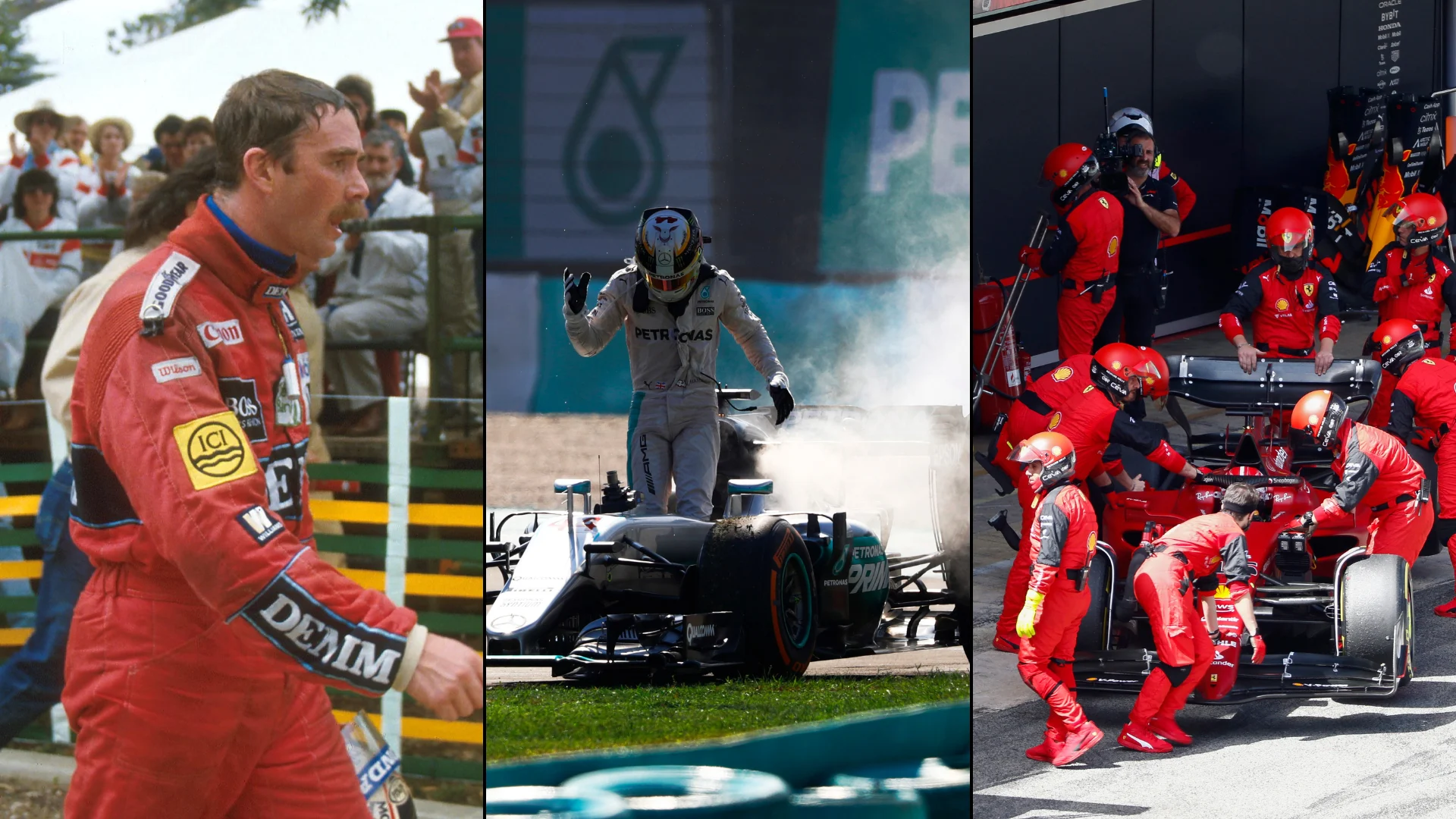
As any F1 driver and team knows, every point can prove crucial when it comes to deciding the World Championship – a fact that will likely be on the minds of Kimi Antonelli and Mercedes after another mechanical issue for the Italian at the British Grand Prix.
While catching Charles Leclerc for the lead, Antonelli’s W17 suffered a problem with the left front wheel shield, forcing him to make two extra pit stops. His struggles with turning the car also led to a five-second penalty for exceeding track limits, dropping him out of the points.
This has resulted in the youngster’s margin over team mate George Russell being reduced to 25 points in the standings – and while there is still a long way to go, it would not be the first time that a reliability moment has had a significant impact on a title battle…
Lewis Hamilton, 2016
Somebody who knows all too well about how a mechanical gremlin can alter the championship fight is the man that Antonelli replaced at Mercedes. Lewis Hamilton had been engaged in a tense title battle with team mate Nico Rosberg throughout the 2016 season, with Hamilton having taken six wins to Rosberg’s eight ahead of Round 16 in Malaysia.
Hamilton trailed Rosberg by only eight points entering into the weekend, and his prospects of closing in further appeared strong when the Briton built a significant lead on race day, Rosberg having dropped backwards following a Lap 1 collision with Sebastian Vettel.
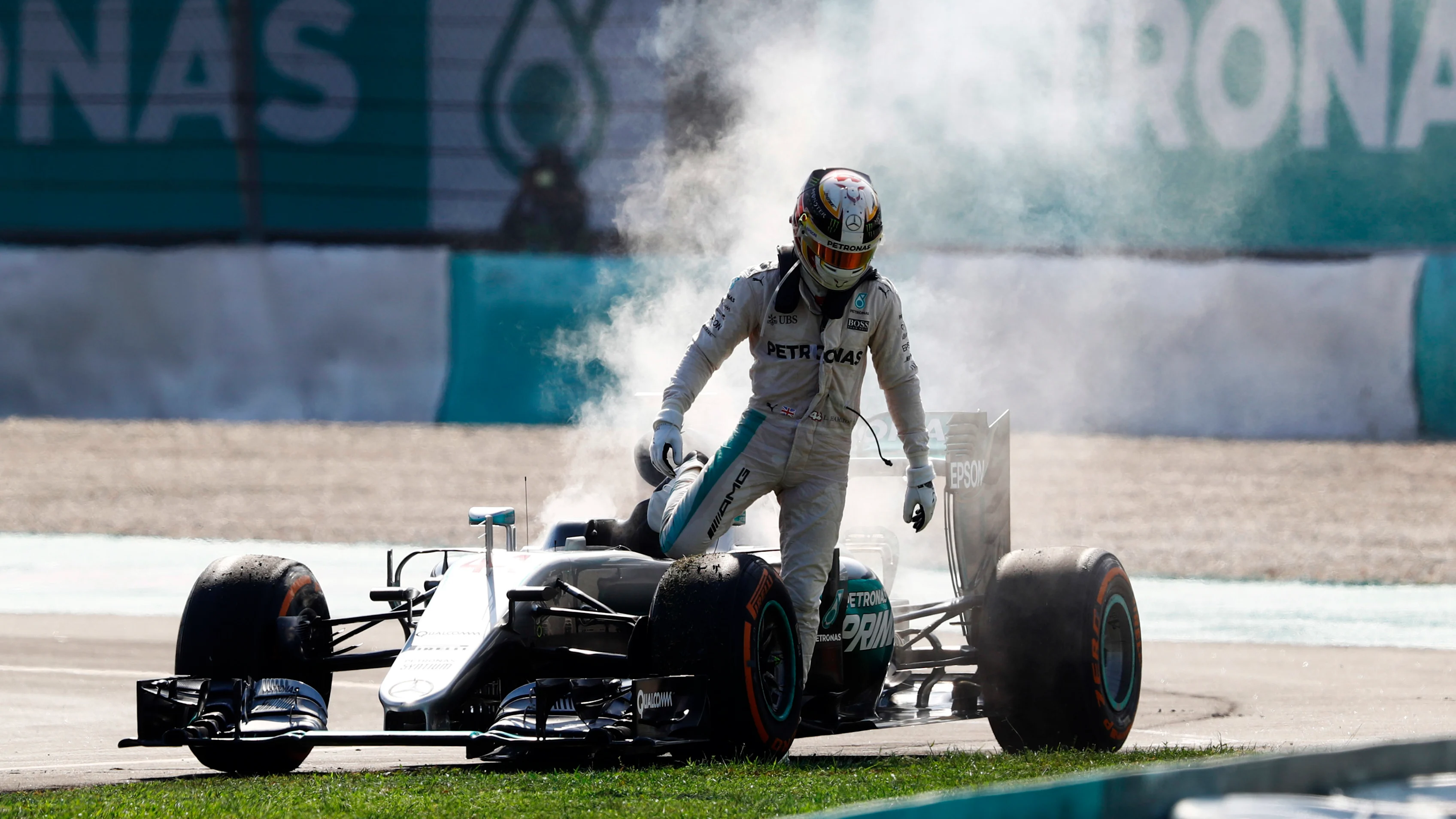
However, with just 15 laps to go, smoke started to emerge from the rear of Hamilton’s car and the then-reigning World Champion was forced to pull off track with an engine failure, sparking cries of “Oh no, no!” from Hamilton.
A P3 finish for Rosberg, meanwhile, saw the German stretch out his advantage at the top of the standings to 23 points over his team mate. His lead would ultimately prove unbeatable from there, with Rosberg going on to clinch the title before immediately retiring at the end of the season.
Kimi Raikkonen, 2005
That particular DNF for Hamilton was arguably the turning point in his duel with Rosberg – but in some instances, it has been not one but multiple reliability issues that have had an undeniable effect on the championship.
Rewind back to 2005, and the introduction of new technical regulations had seen McLaren and Renault take the upper hand from the previously dominant Ferrari. However, the former had often suffered technical glitches in the years prior – with Kimi Raikkonen recording nine mechanically-related retirements in 2002 – and this would again rear its head as the Finn battled for the title against Fernando Alonso.
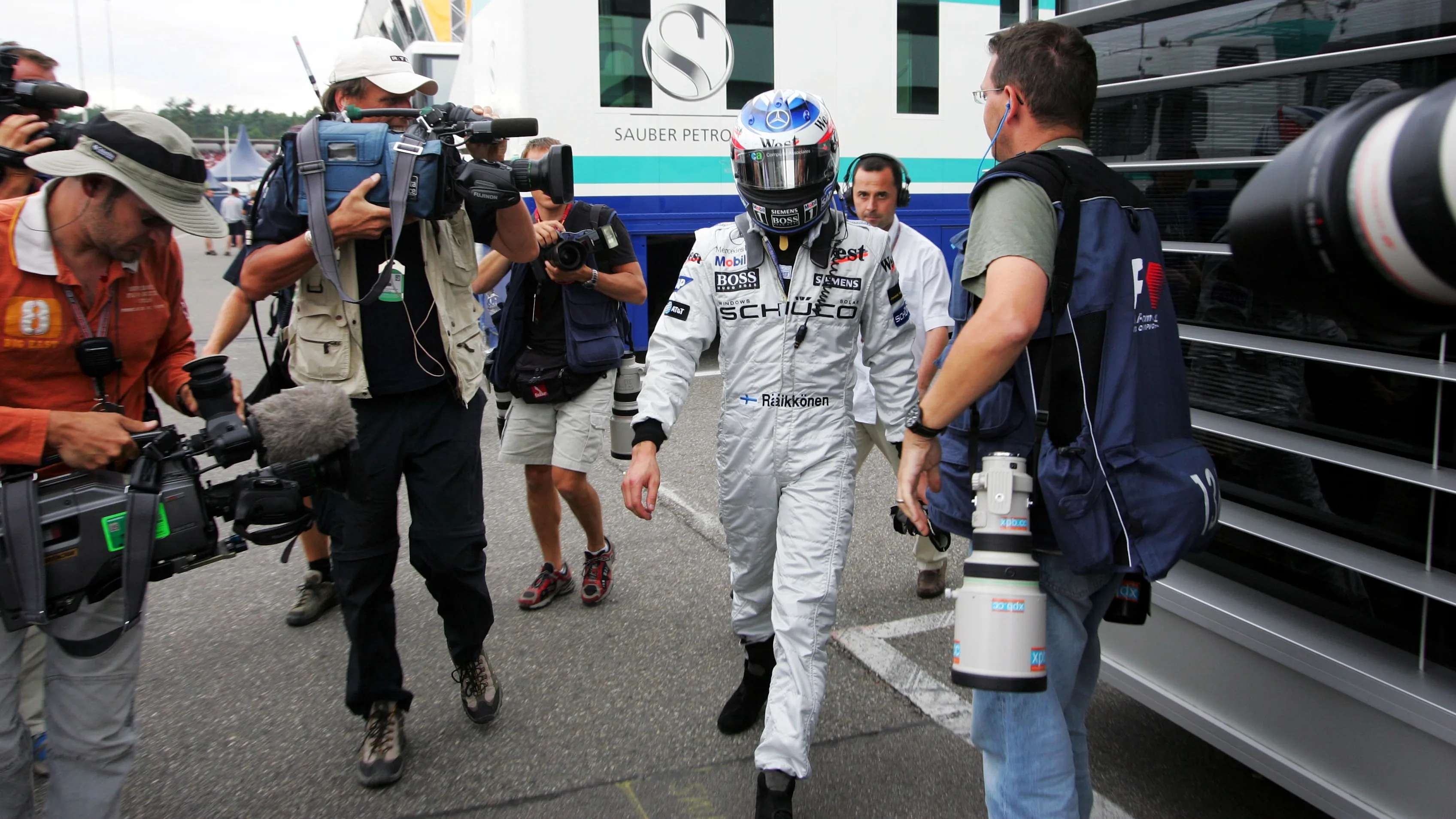
A tyre valve failure at Round 2 in Malaysia dropped him down the order, while a driveshaft issue led him to retire after building up a commanding lead two races later at the San Marino Grand Prix. He then went on to serve engine penalties at Magny-Cours and Great Britain, forcing him to start from much further back on the grid.
At the 12th race of the season in Germany, Raikkonen was again leading and looked on course to close in further on title rival Alonso in the standings – but a hydraulics failure struck, resulting in him recording another DNF. And while a number of wins in the second half of the campaign helped ‘the Iceman’ to stay in the fight for some time, he could not overcome Alonso’s advantage and the Spaniard sealed his first World Championship.
Nigel Mansell, 1986
For perhaps one of the most famous – and dramatic – reliability moments that had a seismic effect on the championship outcome, look no further than Nigel Mansell’s retirement from the 1986 Australian Grand Prix.
After a competitive season, Mansell was one of three drivers still in contention for the title when the paddock arrived in Adelaide for the finale, with his Williams team mate Nelson Piquet and McLaren’s Alain Prost also in with a chance of taking the crown. Mansell led on 70 points, ahead of Prost on 64 and Piquet with 63.
It was Mansell who appeared to have the best prospects of all, the Briton only needing a P3 result to become World Champion. The chances looked even better when he secured pole position – and while he lost the lead during the opening stages of the race, he later found himself running in that all-important third place.
However, just one lap after taking the position, Mansell’s left-rear tyre exploded at high speed. As he fought to keep control of the car, the Williams driver managed to pull off track – and with that his title ambitions had diminished, while Prost went on to win the race and clinch his second World Championship.
Charles Leclerc, 2022
While Antonelli found fortune going against him at the recent British Grand Prix, it instead favoured Charles Leclerc, who went on to claim his first win since 2024. The Monegasque is no stranger to bad luck himself, however.
Back in 2022, Ferrari got off to a strong start amid a new wave of ground effect technical regulations. Leclerc claimed two victories during the opening three rounds, and from there quickly built up a good lead over Max Verstappen in the championship standings.
Ahead of the sixth round of the season in Barcelona, Leclerc’s margin over Verstappen stood at 19 points following three wins for the Dutchman – and the Ferrari man bettered his chances of maintaining his lead by securing pole position.
But on Lap 28 of the race – which he was comfortably leading – Leclerc’s car suddenly lost power, forcing him to retire. With Verstappen winning the Grand Prix, the Red Bull driver took over the championship lead and also seized momentum, going on to claim his second title in succession.
Alain Prost, 1983
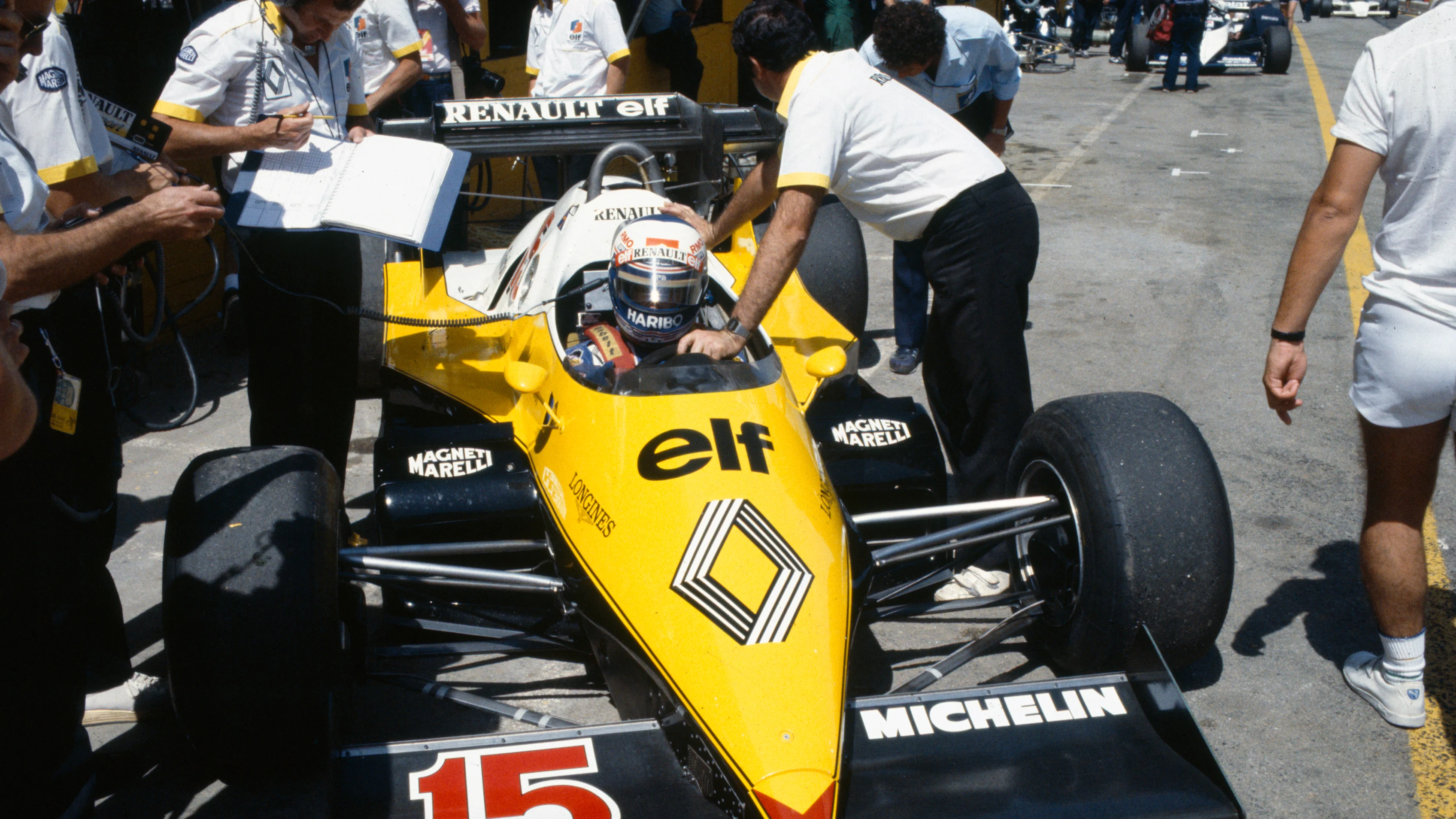
The 1983 season marked Alain Prost’s fourth in F1 and became his best shot yet at fighting for the World Championship – the Frenchman taking four wins at the wheel of the Renault RE40.
With three rounds remaining on the calendar, Prost was leading the standings ahead of Ferrari’s Rene Arnoux and Brabham’s Nelson Piquet. A turbo failure for Prost at the first of these races resulted in a DNF, meaning that his rivals had closed in prior to the penultimate event.
By the time of the finale in South Africa, two points separated Prost and Piquet at the top, with Arnoux eight points adrift of the lead in third. After starting from fifth on the grid, Prost worked his way up to third during the race – but his chances unravelled when another turbo issue struck.
As Arnoux had also retired due to an engine problem, the title looked to be Piquet’s for the taking – and that would prove to be the case, the Brazilian ending the event in third and scoring his second World Championship in the process.
Mika Hakkinen, 2000
For Prost, reliability struggles during the latter part of the season undid his challenge – but sometimes the impact can still be felt when such issues take effect in the early stages of the campaign.
Mika Hakkinen started 2000 looking to defend his back-to-back championships, the Finn having beaten Ferrari’s Eddie Irvine to the crown by just two points in 1999. He initially kicked things off in impressive fashion at the first round in Australia, locking out the front row with McLaren team mate David Coulthard.
Both drivers would retire with engine problems during the Grand Prix, however, while another DNF followed for Hakkinen at the next event in Brazil, this time due to oil pressure issues – and all of this allowed Michael Schumacher to take the championship lead for Ferrari.
While Hakkinen managed to fight back during the races that followed and eventually returned to the top of the standings, another engine failure at the United States Grand Prix with just two races to spare handed the momentum back to Schumacher, who went on to clinch the title at the subsequent round in Japan.
Michele Alboreto, 1985
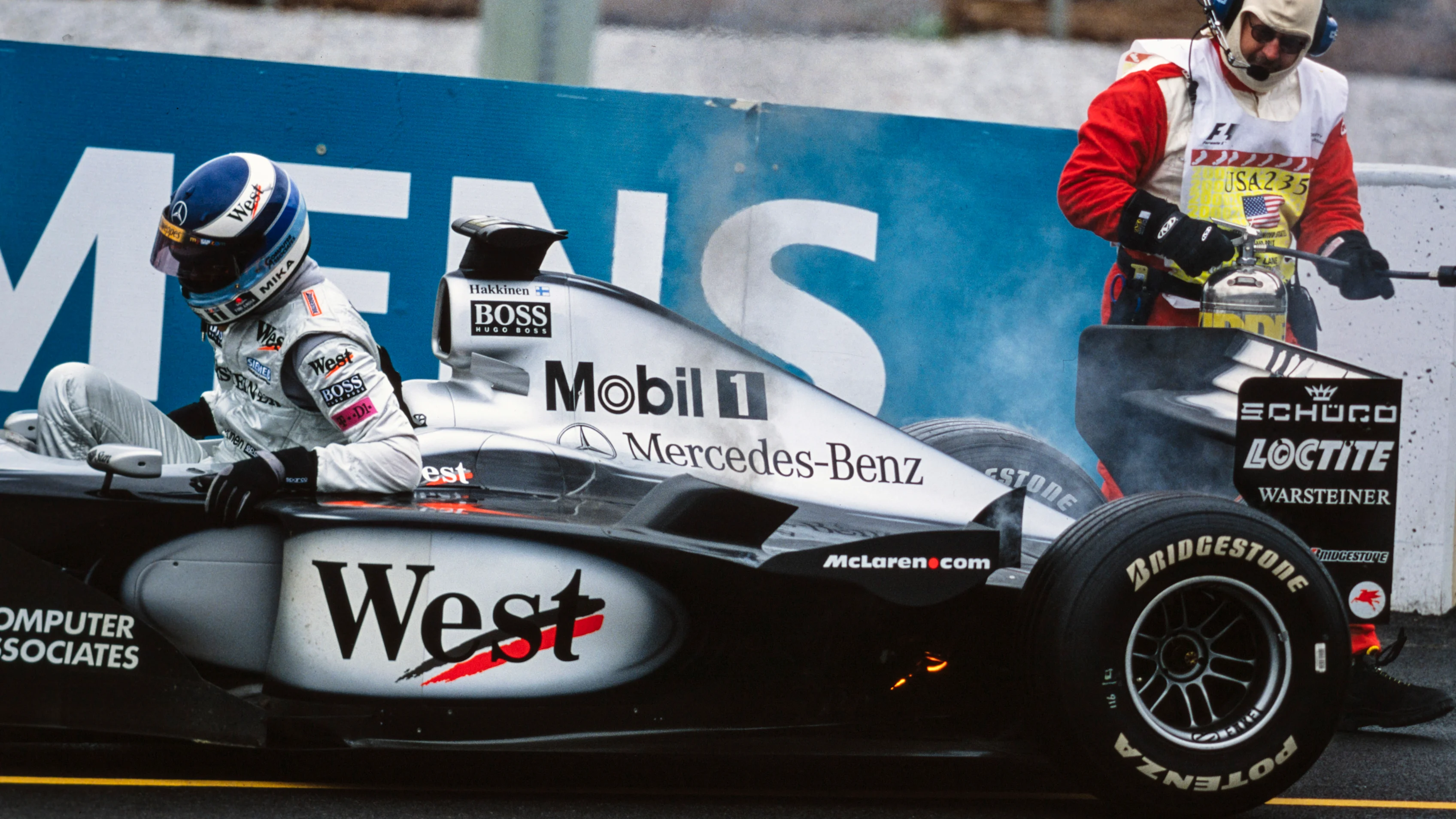
In his second season with Ferrari – and fifth overall in F1 – Michele Alboreto was building a solid campaign and headed the championship standings after nine rounds, having scored two victories along the way.
While Prost drew equal at the top following a win at the 10th event in Austria, Alboreto had finished on the podium and remained in the fight – until a spate of mechanical setbacks put paid to his title bid in the latter stages.
An engine problem only a few laps from the finish forced him to retire from the Scuderia’s home race in Italy, while issues with the clutch, turbo and gear shift led to further non-finishes in Belgium, Brands Hatch, South Africa and Australia.
Alboreto still managed to end the season as runner-up to Prost, marking the Italian’s best result through his extensive Formula 1 career.
Stirling Moss, 1958
Finally, we end with a slightly different case where reliability certainly played a key role in the championship outcome – but it was an unprecedented move from the driver in question that ultimately saw him lose out on the title.
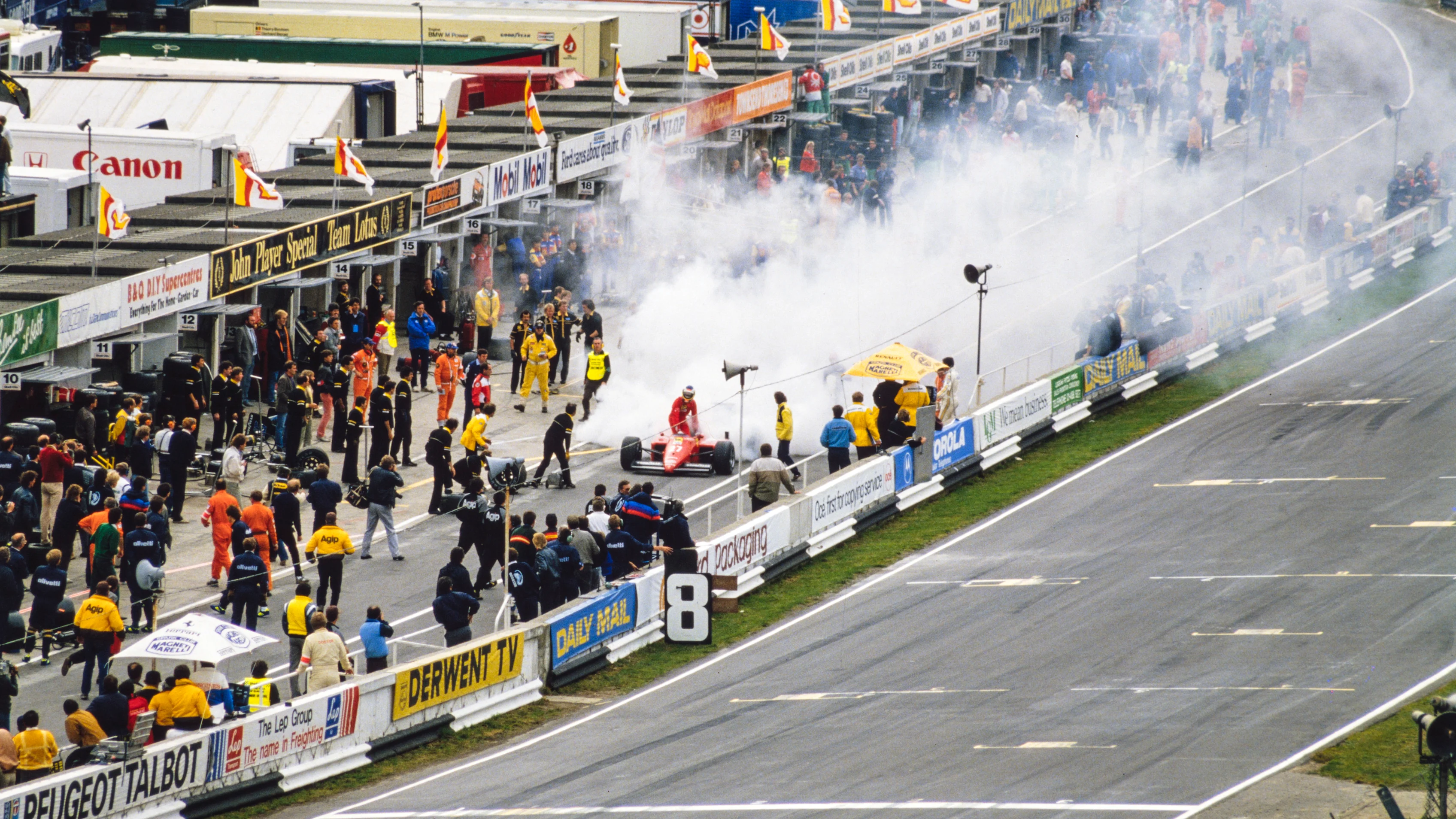
Stirling Moss had consistently finished second in the standings across 1955, 1956 and 1957. Racing for Vanwall in 1958, it appeared that car problems had undone his chances this time around, with five mechanically-related DNFs across the 10-round season.
Having eventually missed out on the title to Ferrari’s Mike Hawthorn by just one point, Moss may have been left thinking of what could have been. However, what sets this story apart from those we have already mentioned is that Moss could potentially still have won despite those retirements, but the Briton instead opted for an act of sportsmanship.
At the Portuguese Grand Prix, Hawthorn was initially disqualified for restarting his car against the direction of traffic – but after witnessing the incident, Moss defended his rival to the stewards and Hawthorn’s points were reinstated, a gesture that undoubtedly contributed towards the latter winning the championship.
Next Up
Related Articles
 Bortoleto handed penalty after yellow flag infringement
 Russell ‘feels like myself again’ after Baku victory
 Betting5 betting lessons after Russell wins in Azerbaijan
 What the teams said – Race day in Azerbaijan
 .webp) Unlocked6 Winners and 5 Losers from Azerbaijan
Unlocked6 Winners and 5 Losers from Azerbaijan Sainz and Albon evaluate Williams’ Baku upgrades