The beginner’s guide to the F1 calendar
Our guide explains the F1 calendar, when the season starts and which races are on it. The calendar has come a long way since the sport’s inaugural season in 1950.
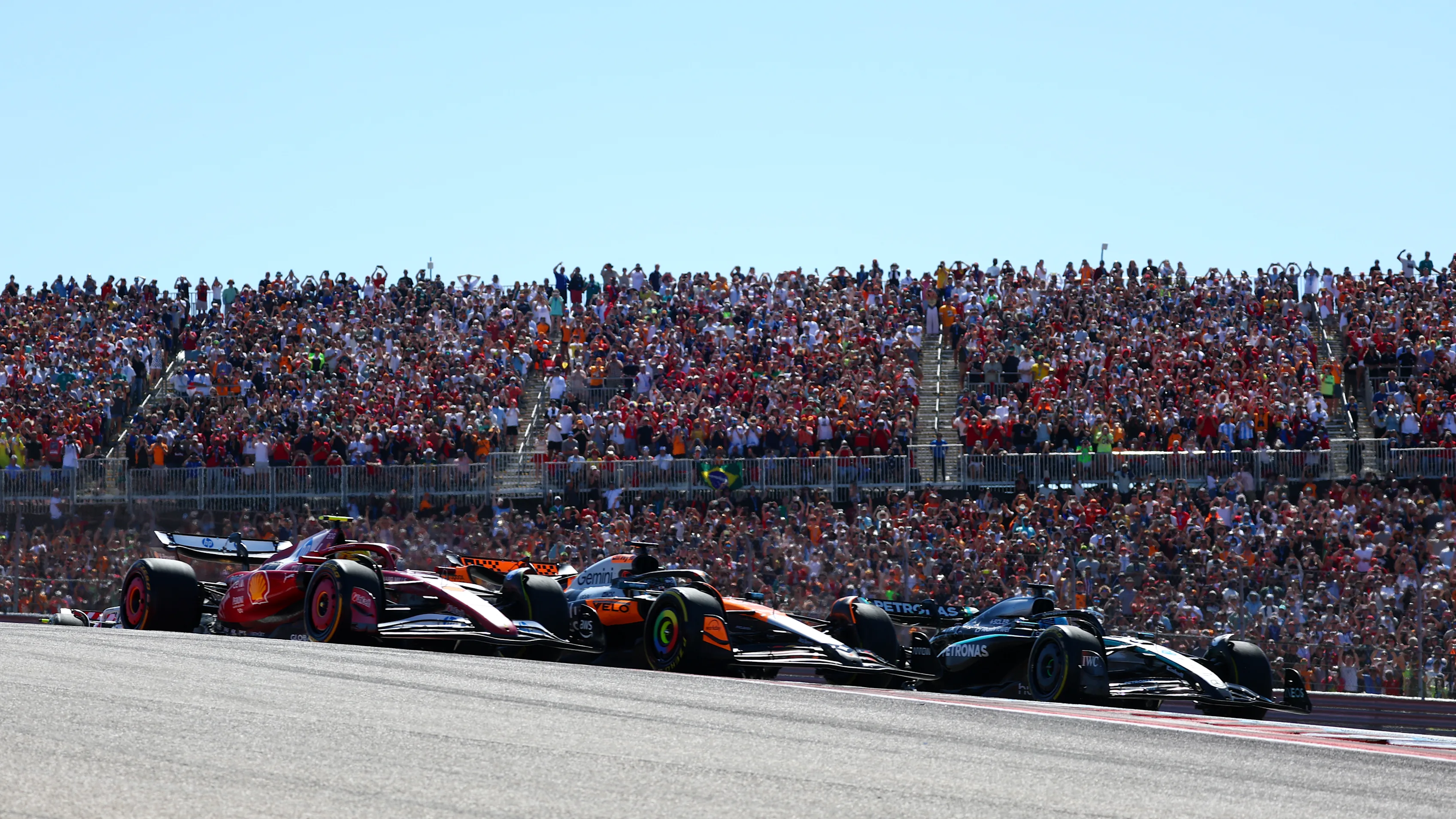
Our beginner’s guide provides all you need to know about the F1 calendar, while also explaining how it has developed since the sport’s inaugural season in 1950.
What is the 2026 F1 calendar?
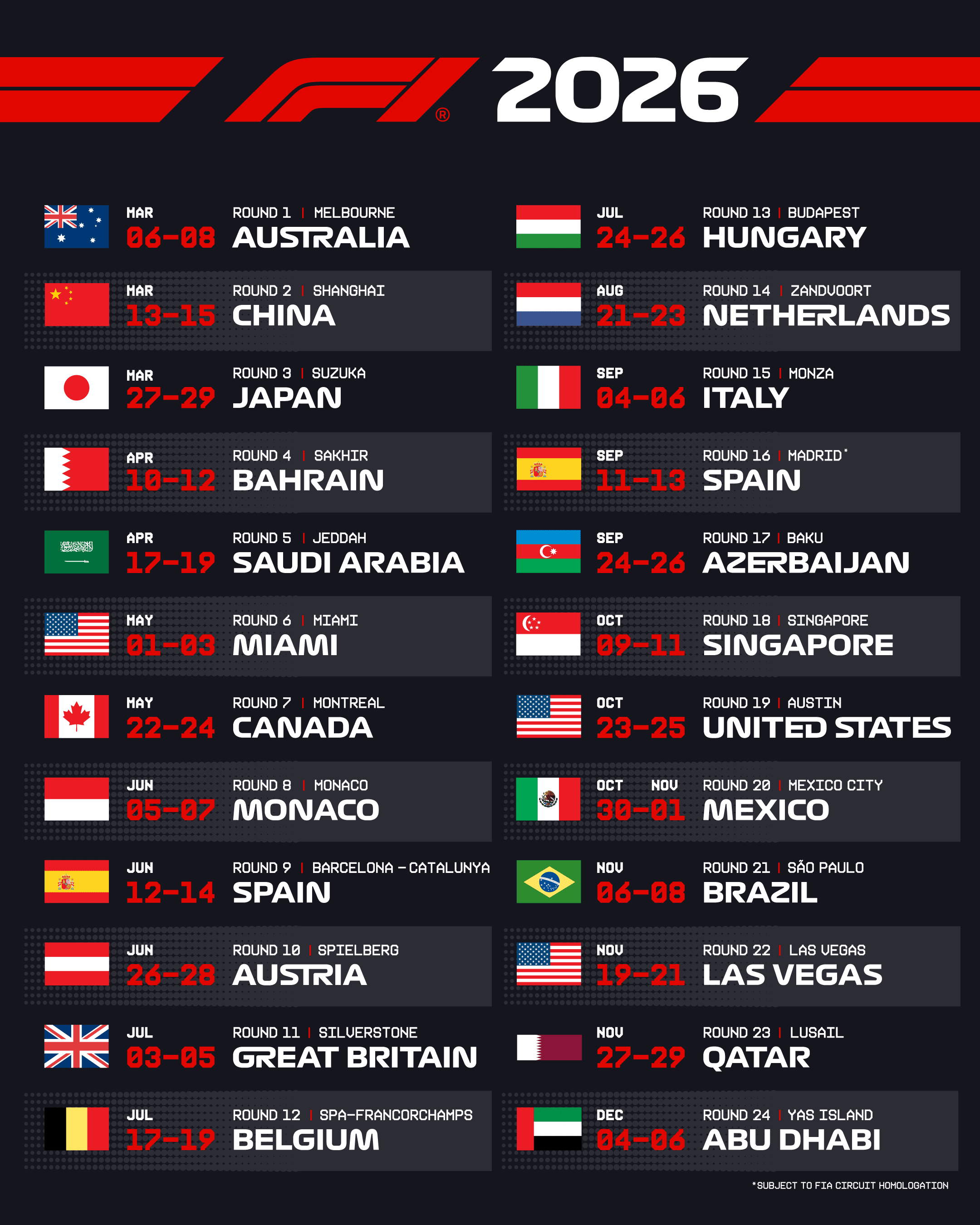
The 2026 calendar is the 77th FIA Formula One World Championship season, and the season begins with a double header. Australia (6-8 March) hosts the first Grand Prix of the year, before the paddock visits China (13-15 March) – the first F1 Sprint weekend of 2026.
A better geographical flow of races (compared to historic seasons) continues, with Japan (27-29 March) hosting the third event of the season, before the Bahrain (10-12 April) and Saudi Arabian (17-19 April) Grands Prix take place on back-to-back weekends.
F1 then heads to North America for Miami (1-3 May) and Canada (22-24 May), before the European leg of the campaign begins – concluded by the Spanish Grand Prix (11-13 September) at its new home in Madrid.
Visits to Azerbaijan (24-26 September) and Singapore (9-11 October) follow, before F1 returns to the Americas – the United States Grand Prix (23-25 October) kicking off that leg.
The season comes to its thrilling conclusion with a triple header – Las Vegas (19-21 November), Qatar (27-29 November) and Abu Dhabi (4-6 December).
When does the 2026 F1 season start?
The Bahrain International Circuit will host a total of six days of pre-season testing, split between two three-day tests. Testing 1 runs 11-13 February, before Testing 2 takes place a week later on 18-20 February.
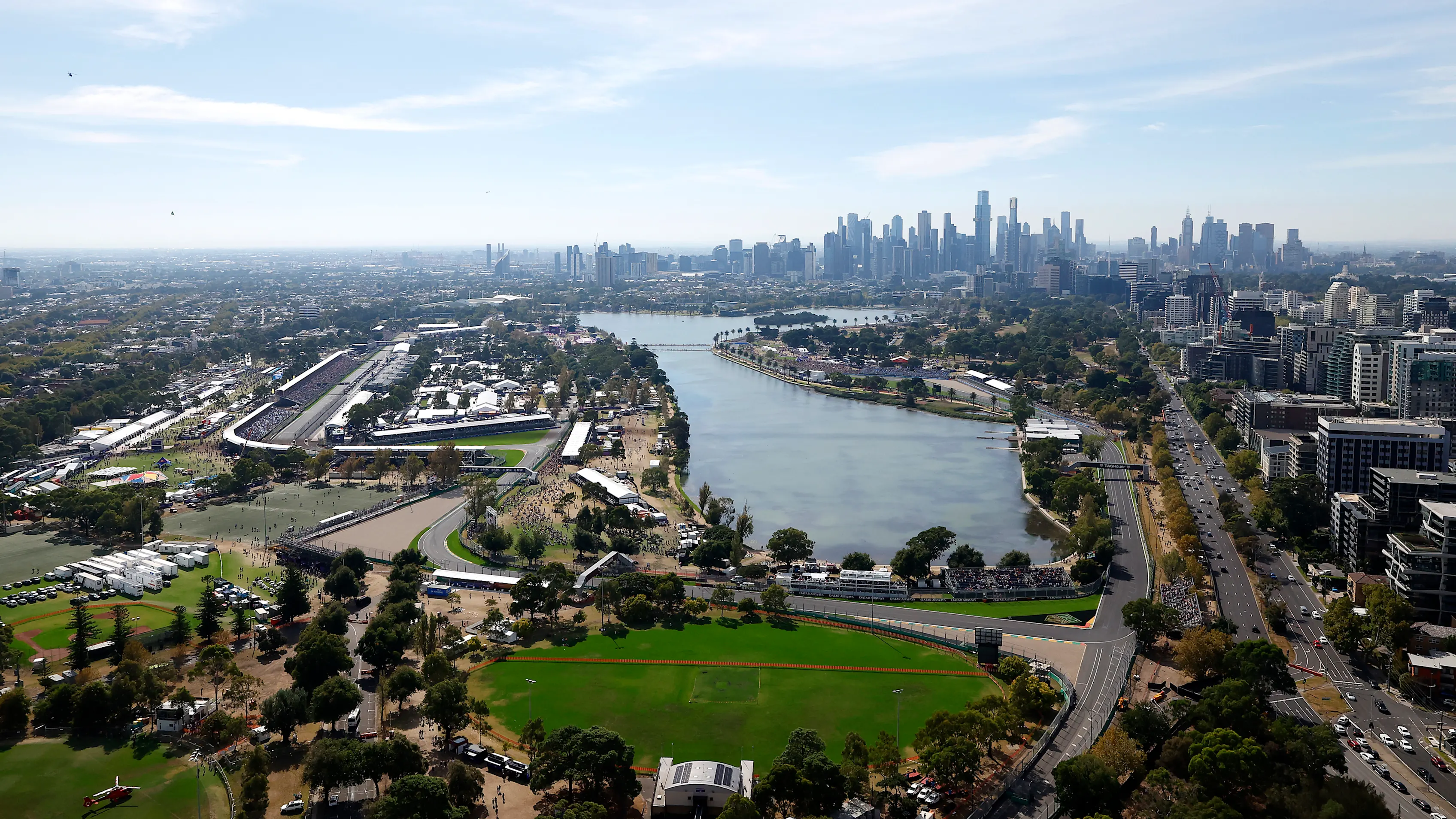
The 2026 Formula 1 season begins in earnest with the Australian Grand Prix at Albert Park in Melbourne on (6-8 March).
When does the 2026 F1 season finish?
The 2026 Formula 1 season concludes with a triple header, with the Las Vegas Grand Prix (19-21 November), Qatar Grand Prix (27-29 November) and Abu Dhabi Grand Prix (4-6 December) wrapping up the year.
How many races are on the 2026 F1 calendar?
The 2026 Formula 1 calendar features 24 Grand Prix weekends, including six F1 Sprint races, taking place around the world from March through December.
A total of 21 countries across five continents are on the schedule. Classic tracks such as Silverstone, Spa-Francorchamps and Suzuka, combined with more recent additions including Las Vegas, Miami and Saudi Arabia give an exciting and varied selection of circuits that offers plenty to look forward to.
2026 F1 calendar
| Date | Country | Venue |
|---|---|---|
| March 6-8 | Australia | Melbourne |
| March 13-15 | China | Shanghai (Sprint) |
| March 27-29 | Japan | Suzuka |
| April 10-12 | Bahrain | Sakhir |
| April 17-19 | Saudi Arabia | Jeddah |
| May 1-3 | USA | Miami (Sprint) |
| May 22-24 | Canada | Montreal (Sprint) |
| June 5-7 | Monaco | Monaco |
| June 12-14 | Spain | Barcelona-Catalunya |
| June 26-28 | Austria | Spielberg |
| July 3-5 | Great Britain | Silverstone (Sprint) |
| July 17-19 | Belgium | Spa-Francorchamps |
| July 24-26 | Hungary | Budapest |
| August 21-23 | Netherlands | Zandvoort (Sprint) |
| September 4-6 | Italy | Monza |
| September 11-13 | Spain | Madrid* |
| September 24-26 | Azerbaijan | Baku |
| October 9-11 | Singapore | Singapore (Sprint) |
| October 23-25 | USA | Austin |
| October 30 - November 1 | Mexico | Mexico City |
| November 6-8 | Brazil | Sao Paulo |
| November 19-21 | USA | Las Vegas |
| November 27-29 | Qatar | Lusail |
| December 4-6 | Abu Dhabi | Yas Marina |
| *Subject to FIA circuit homologation |
How many F1 Sprint events are there in 2026?
Six circuits will host F1 Sprint weekends in 2026 – the fifth season of the Sprint format.
The exciting 2025 roster sees China and Miami on the Sprint line-up for a second consecutive year, joining Austin and Qatar which both return to host their third Sprint events. Belgium returns to the line-up for the first time since 2023, while Brazil continues its run of hosting a Sprint every year since the format began in 2021.
.webp)
What are ‘double headers’ and ‘triple headers’?
Traditionally, F1 races were planned with a weekend-on, weekend-off approach, but an expanding calendar brought about by the ever-increasing popularity of the sport led to the arrival of double headers and, in some cases, triple headers.
A double header is a sequence of back-to-back Grands Prix on successive weekends, while a triple header is three race weekends in a row – venues being grouped together by location where possible. Simply put, this allows for more races within the 52-week year.
What does the term ‘flyaway race’ mean?
The F1 calendar is a global affair, very much putting the ‘world’ in World Championship. But you will often hear those involved differentiating between races held in Europe and those in the rest of the world – the key word being ‘flyaway’.
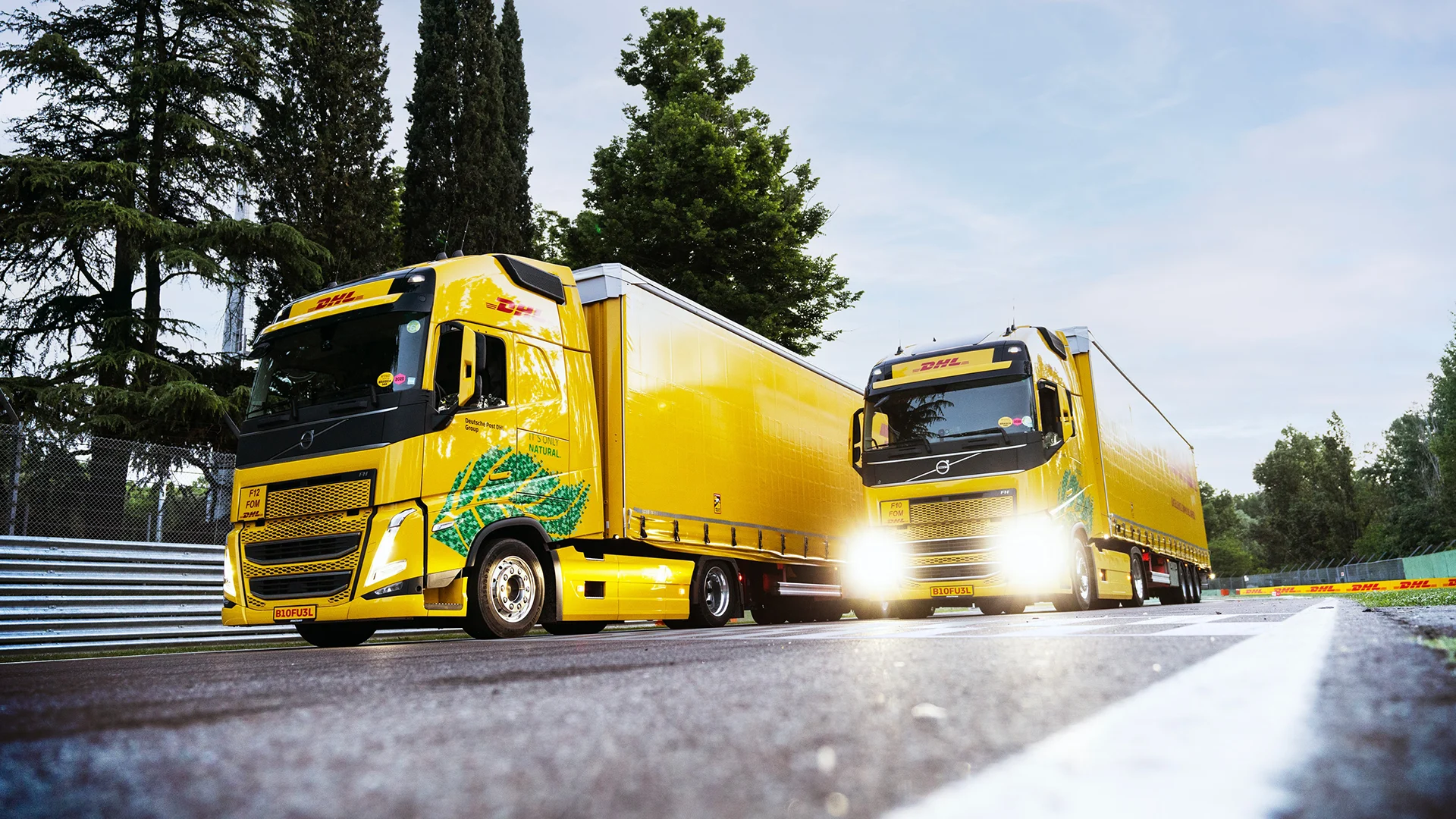
European rounds allow the teams to transport all their equipment – including the F1 cars themselves – by truck, because they are based in Europe (Nine of the 11 teams are set up in the UK, while two operate from Italy). Events held further afield – in different continents and/or across seas – need other forms of travel, with the paddock being flown or shipped between each venue.
F1 transports all cars from race to race to assist the teams, supported by a partnership with global logistics experts DHL. For some flyaway events, supplementary equipment is sent by sea months in advance.
How does the current calendar compare to F1’s first championship season?
The F1 calendar of today differs greatly to the one agreed for the first year of the World Championship in 1950. Back then, there were only seven races and they were spread out from May to September, with six held in Europe – the exception being the US-located Indianapolis 500, which most regular F1 drivers skipped.
New European venues gradually arrived as Formula 1 established itself, while the first overseas addition came in 1953 as teams headed to Argentina in South America for the first time. Since then, the sport has expanded to North America, Asia, Australia and the Middle East, with races having also been held in Africa.
Monaco, Monza, Silverstone and Spa are circuits that still feature on the F1 calendar from that very first season in 1950, although plenty of safety-based changes and track layout modifications have been made since then.
Next Up
Related Articles
 BettingRed Bull's Baku brilliance gives Verstappen fresh hope
 Lawson baffled by Lindblad clash in Baku that ‘sucks’
 Colapinto gets 5-place grid drop for Bahrain GP in Malaysia
  Vasseur offers Ferrari upgrade promise to frustrated Leclerc
 How Baku highlighted McLaren’s straight line weakness
 Sainz and Albon evaluate Williams’ Baku upgrades