The beginner’s guide to F1 flags
Our guide provides all you need to know about the flags used in F1, with an all-in-one list to help you through the season.
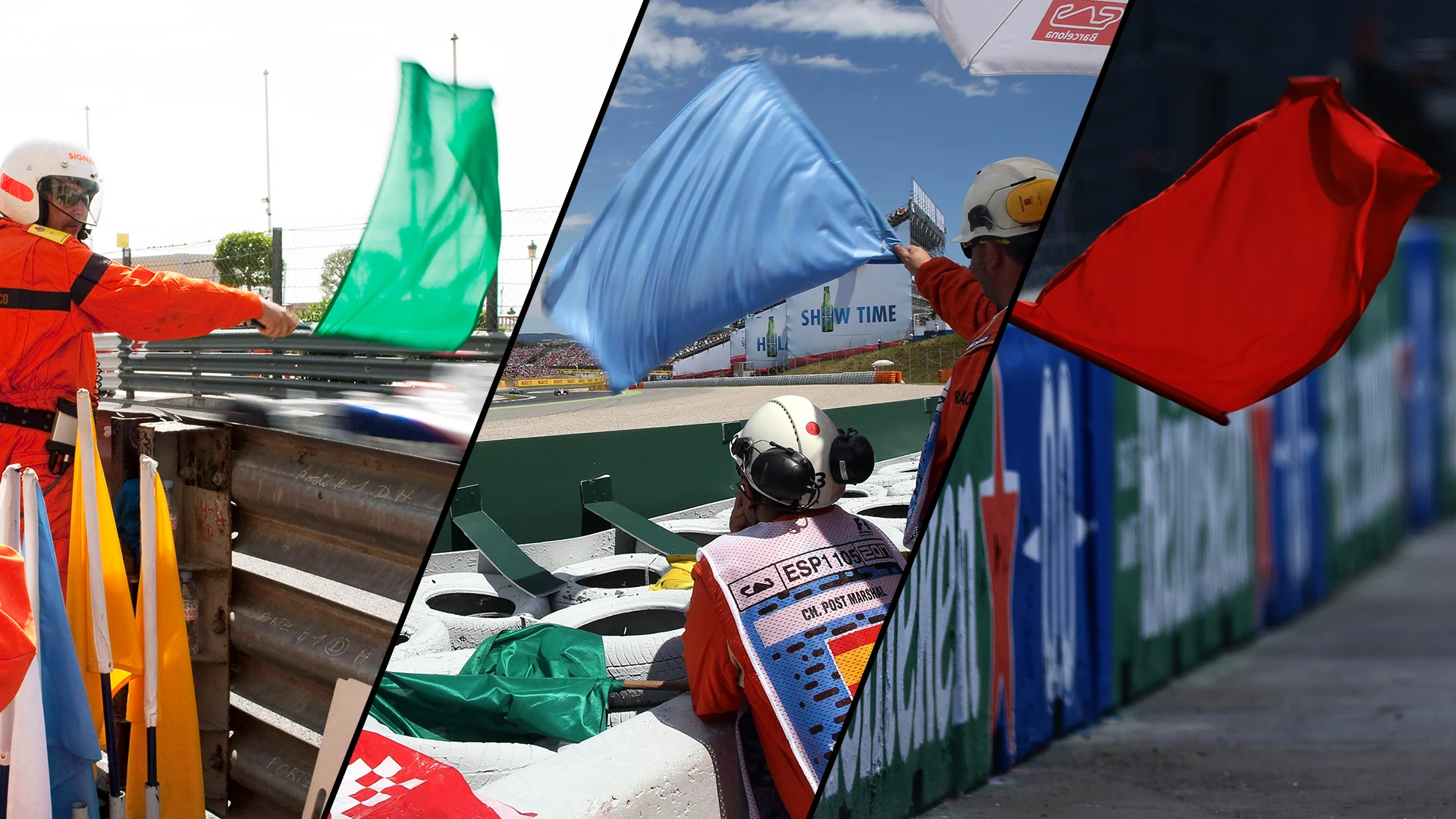
F1 drivers have plenty to think about while racing around the world at lightning speeds – including a complete and immediate understanding of what the marshals trackside are signalling. Our beginner’s guide provides all you need to know about F1 flags, with an all-in-one list to help you through the season.
Green flag
An easy one to start with, the green flag is used to indicate that the track is clear and drivers can proceed – whether this is at the start of a warm-up lap, practice session or Qualifying, or immediately after an incident that needed the use of one or more yellow flags.
Red flag
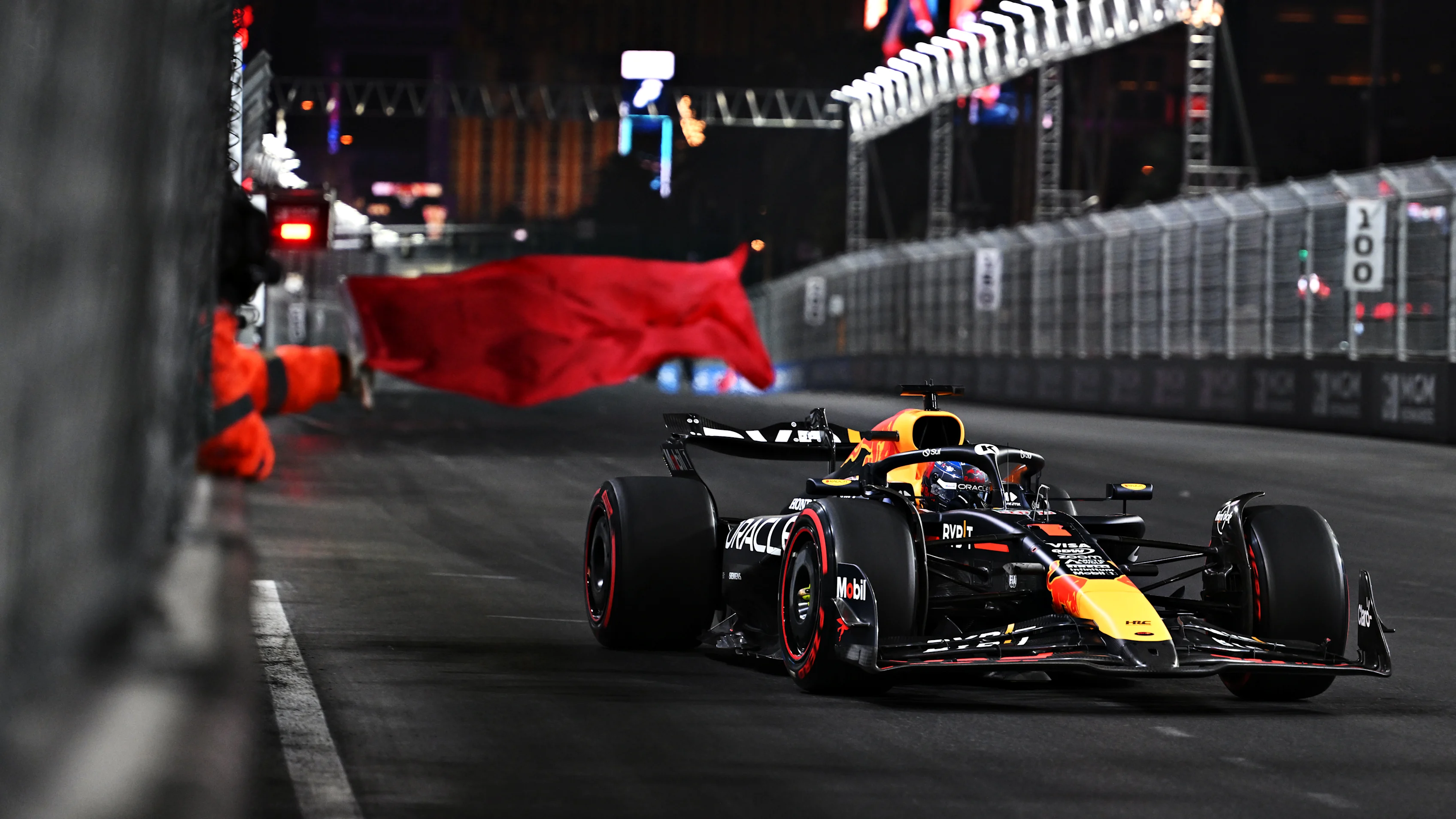
A red flag is waved at the start line – and at each marshal post around the circuit – when the Race Director decides to stop a session or race, with reasons ranging from a serious incident to poor weather conditions.
In practice and Qualifying, all drivers are required to reduce their speed and proceed slowly back to their respective garages, while in the race drivers are required to reduce their speed and proceed slowly to the pit lane, line up at the exit, and await instructions.
Yellow flag
Simply put, the yellow flag is a signal of danger and can be shown to drivers in two ways:
Single waved
Drivers need to reduce their speed, cannot overtake and must be prepared to change direction, due to a hazard beside or partly on the track. It must be evident that a driver has reduced their speed during the relevant sector(s).
Double waved
Drivers need to reduce their speed significantly, cannot overtake and must be prepared to change direction or stop, due to a hazard wholly or partly blocking the track and/or marshals working on or beside the track.
During Free Practice and Qualifying, it must be evident that a driver has not attempted to set a meaningful lap time (drivers should abandon the lap, though it does not mean they have to pit, as the track could be clear the following lap).
Yellow flag with red stripes
A motionless, striped yellow and red flag is shown to inform drivers that there has been a deterioration in grip levels on the track ahead, perhaps because of oil or water on the surface.
White flag
The white flag is waved to inform a driver that there is a much slower vehicle ahead, and is sometimes seen at the end of practice sessions while drivers are completing practice starts from the grid.
Blue flag
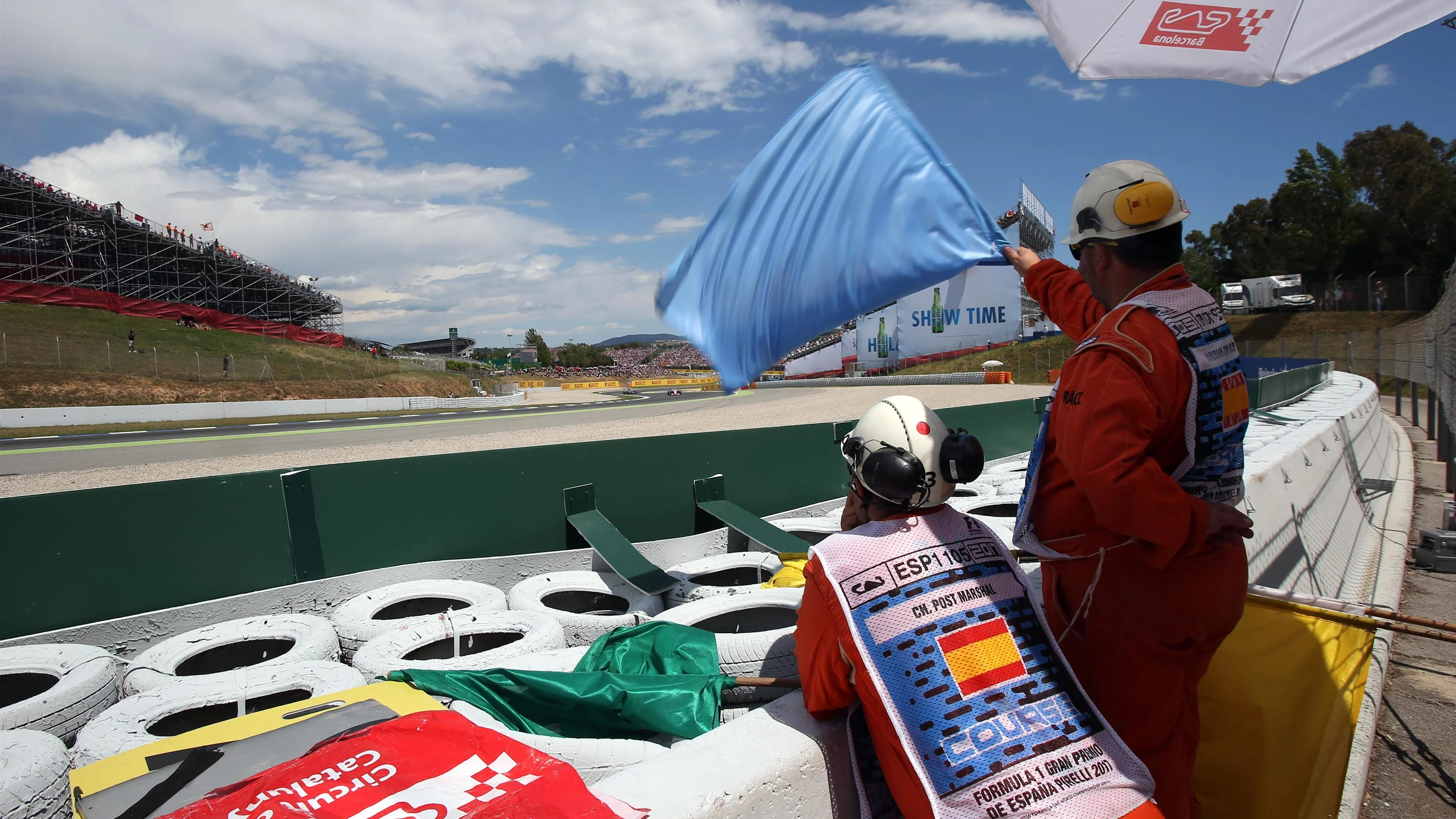
The blue flag is normally waved to inform a driver that they are about to be overtaken, but it takes on a slightly different meaning during the race compared to sessions earlier in the weekend:
At all times
It is shown to inform a driver leaving the pit lane that traffic is approaching from behind (essentially telling the driver to take extra care when rejoining the circuit).
During practice
It is shown to inform a driver that a faster car is close behind and is about to overtake. For example, the driver of the slower car might be on a cool-down lap before returning to the pit lane, while the driver behind is on a much faster lap (e.g. a qualifying simulation).
During the race
It is shown to a driver who is about to be lapped (having been caught by faster cars ahead of them and so falling a full lap behind them). When shown, the driver concerned must allow the following car to pass at the earliest opportunity, and if three warnings to do so are ignored they will be penalised.
‘Code 60’ flag
In some cases, the Clerk of the Course or Race Director may impose a speed limit around a section of track – possibly even the entire circuit – when double yellow flags are displayed during a session.
If a single speed limit is imposed around the entire track, this will be indicated with a single yellow flag and a board showing ‘FCY’ (Full Course Yellow), or a purple flag with a white circle containing the number 60 (known as ‘Code 60’), which sets a 60 kph limit.
If a variable speed limit is imposed, this will be indicated with a single yellow flag and a board labelled 'VSC' (Virtual Safety Car), and if a speed limit is imposed on a section of the track, the start and end of the zone will be marked with a double yellow flag and board labelled ‘SLOW’.
Black flag
The black flag is used to disqualify a driver and orders them to return to their garage at once. The decision to show this flag rests solely with the stewards. A driver being shown the black flag is a rare occurrence in F1.
Black flag with an orange disc
The black flag with an orange circle is used to inform a driver that their car has mechanical problems which are likely to pose a danger to themselves or others, and they must stop in the pits as soon as possible.
If and when the mechanical problems have been rectified to the satisfaction of the chief scrutineer, the car may rejoin the race – otherwise it must remain in the pits.
Black and white flag
Not to be confused with the chequered flag (which is also black and white), the diagonally-divided 'black and white flag' is shown as a warning to drivers that have been reported for unsportsmanlike behaviour, and that any more will result in punishment.
It is accompanied by the driver’s race number – which also applies to the black flag and black flag with an orange disc above.
Chequered flag
The black and white chequered flag – waved from above the pit wall – marks the end of any session or race, and is waved until all competing cars have reached it.
Flag panels
In addition to marshals displaying flags trackside, digital light panels are in place around all F1 circuits to ensure that messages are as clear as possible for drivers – taking into account day and night events and changeable weather conditions (see the video above).
Next Up
Related Articles
 ‘Some drivers shouldn’t be in F1’ – Norris on Baku clash
 Perez reflects on 'one of my best weekends'
 BettingBahrain Grand Prix betting guide and latest odds
.webp) Unlocked6 Winners and 5 Losers from Azerbaijan
Unlocked6 Winners and 5 Losers from Azerbaijan Verstappen 'was trying everything' in quest for Baku victory
 Bortoleto handed penalty after yellow flag infringement