Bringing Schumacher ’94 to life – The story behind the new Netflix documentary
Director Christin Freitag speaks to F1.com about uncovering a different side to Michael Schumacher, revisiting the events of Imola and using archive footage and music to bring his first title-winning season back to life.
.png)
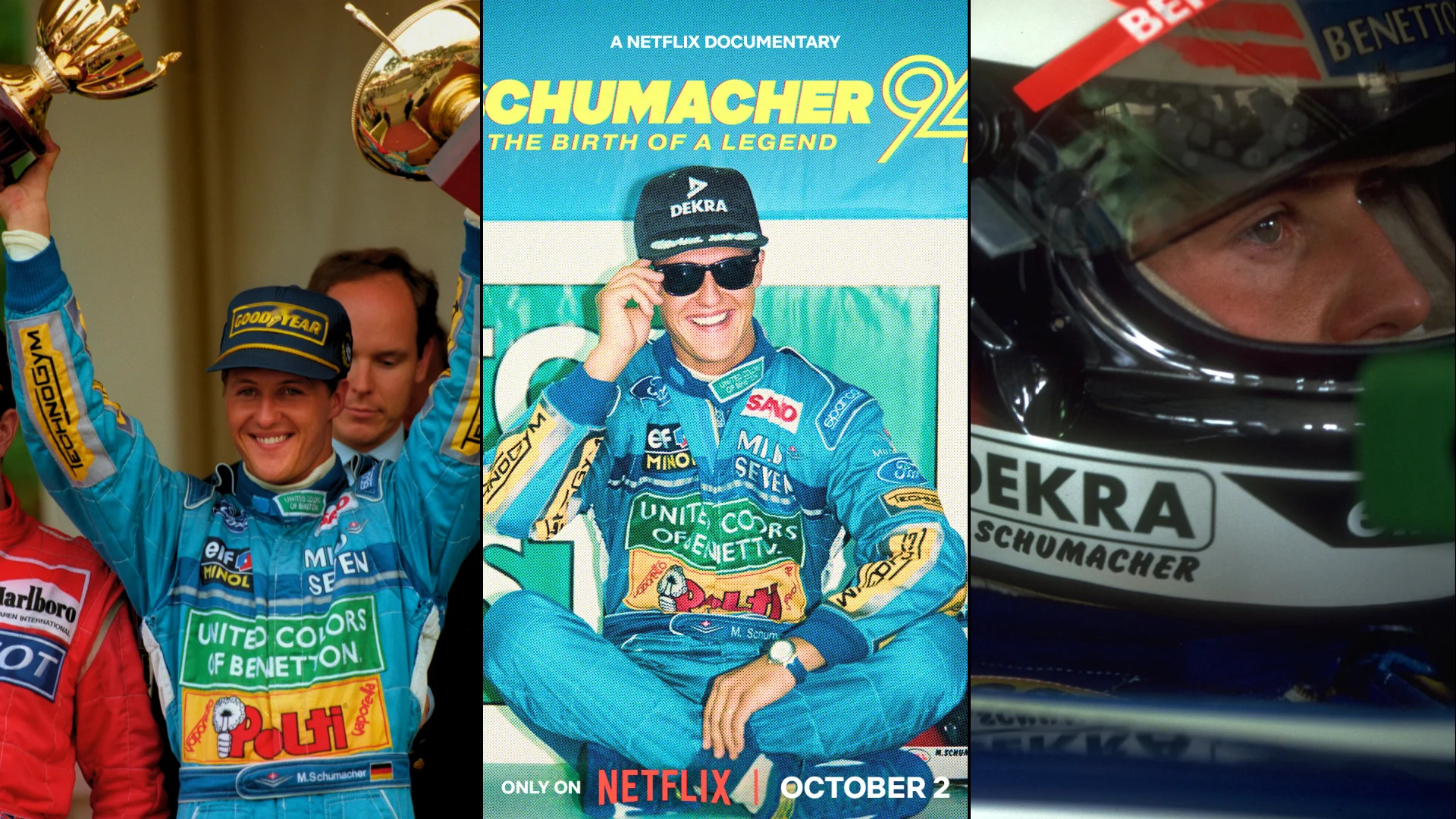
Among the footage that stayed with Christin Freitag after making Schumacher ’94 – The Birth of a Legend was an interview with a spectator at Hockenheim. Asked by a television reporter whether the noise was too much, the man in glasses replied: “No, not at all. Wonderful, wonderful.”
The footage captures the growing enthusiasm for Schumacher in Germany during the season in which he claimed his first Formula 1 World Championship, something Freitag was particularly interested in exploring through the archives.
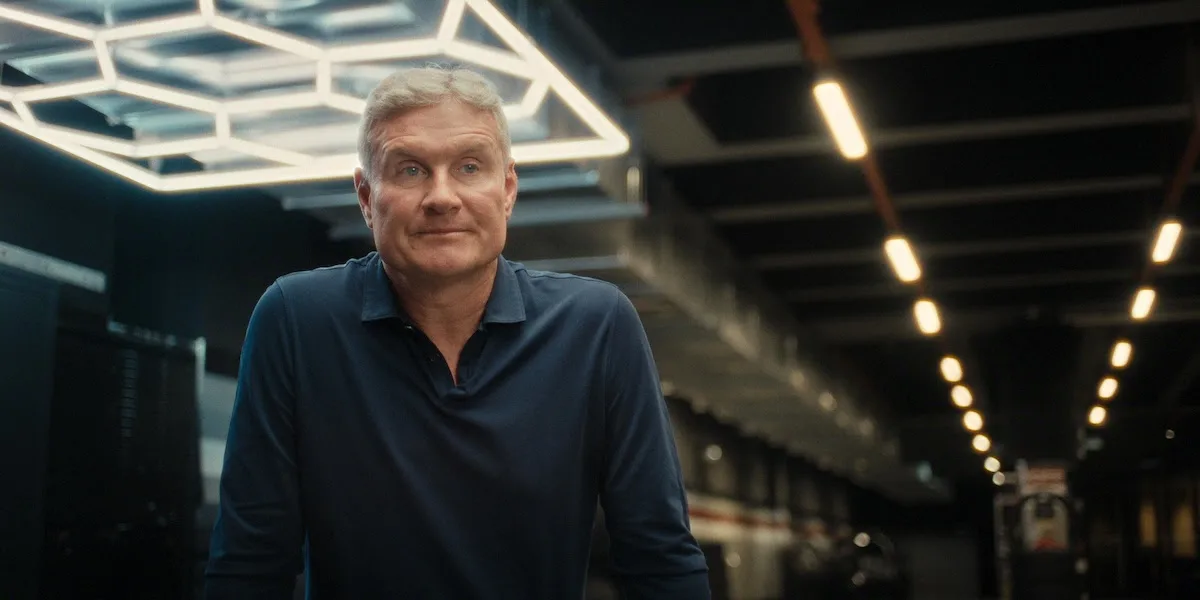
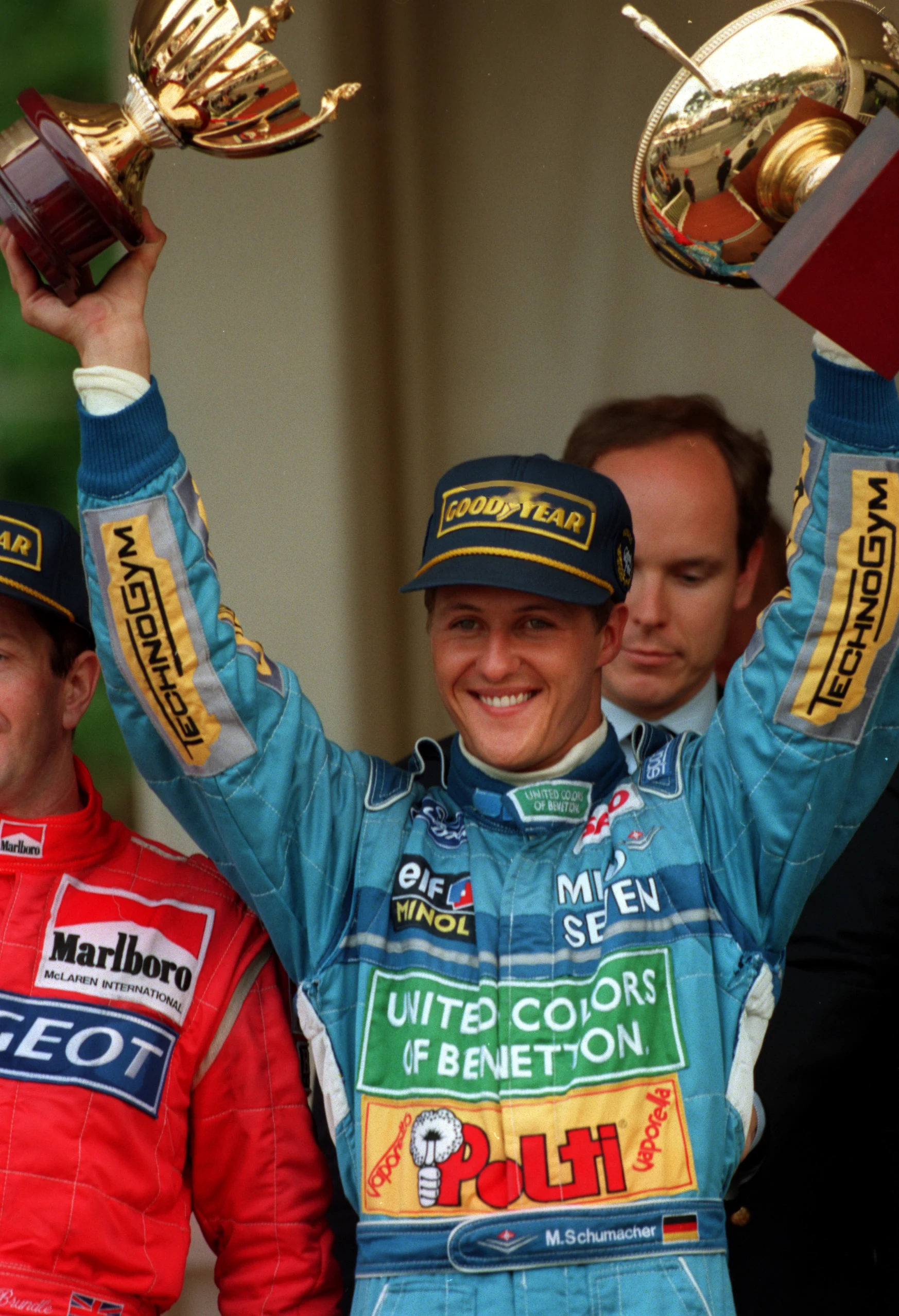
Released on Netflix on October 2, the documentary follows the then-25-year-old Benetton driver from his opening victory in Brazil to the title decider in Adelaide. It features interviews with his wife Corinna, former Benetton Team Principal Flavio Briatore, Bernie Ecclestone, David Coulthard and his manager Willi Weber, among others.
“That’s what we were trying to accomplish – you don’t look from the outside or look back, but you really transport yourself into the time, into this extreme season of Formula 1, and be right there with him,” Freitag tells F1.com.
Searching through 1,300 hours of footage
The major races would inevitably feature, such as the tragic events at Imola and the championship decider in Adelaide. But Freitag and editor Bobby Good also went looking for less familiar moments.
“When you’re new to a subject, you don’t know what you don’t know, so there’s always the possibility of finding interesting stuff,” she explains.
“We had a structure, but we scanned everything. I think we had 1,300 hours of footage from the races and my editor, Bobby Good, was relentless in searching through everything.”
She adds: “All the races tend to look the same after some time. You have the suits, the helmets, the tracks. But you spot straight away when something interesting or real is happening in people’s faces, or with Michael.”
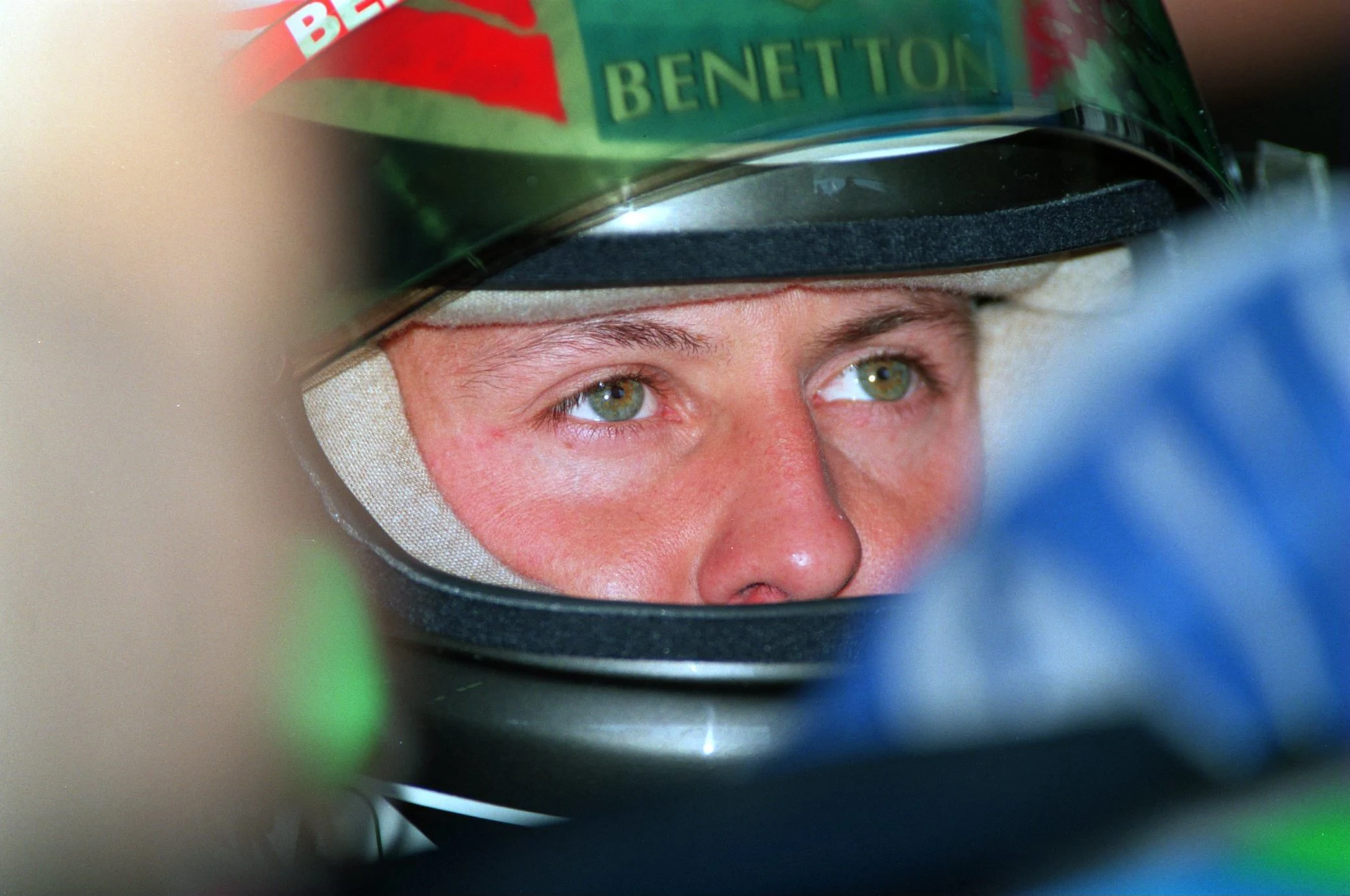
Freitag also planned when interviewees would recount events in the present tense, placing their memories alongside the footage.
“I was trying to build a very narrative structure that really pulls you into the story," she says. "I knew I needed a lot of archive footage for it to be immersive, so I thought maybe 60 or 70 per cent should be archive footage.
“I essentially wrote a script. I knew which scene came when, what protagonists I needed for each scene, and what led to what. It’s basically film-making construction.”
Finding the sound of the 1990s
The soundtrack combines original scoring with music from the decade, including Pulp’s Common People and Paula Abdul’s Rush Rush, a song that holds particular significance for Michael and Corinna.
“It’s important to have songs that transport you right into the time, but the editing is so precise to the music that it was necessary to score a lot of things,” Freitag explains.
“With the score, it was also a process of finding the right tone. You want to feel like you’re in the ’90s, but you don’t want everything to be the same. It has to be modernised in a way that transports you back, but makes it better in a way.
“It’s a mixture of finding songs where they can live and have space, and then there are a lot of scenes that rely on music, but more on the rhythm, so you have to score them.”
The decision to include Common People, released in 1995, towards the start of the documentary was less deliberate than some of the other musical choices.
“I just loved the song," Freitag laughs. "We had a collection of ’90s songs, and a lot of ’90s songs really hurt my ears! It was a gut feeling, more or less. That it also fit was a bonus.”
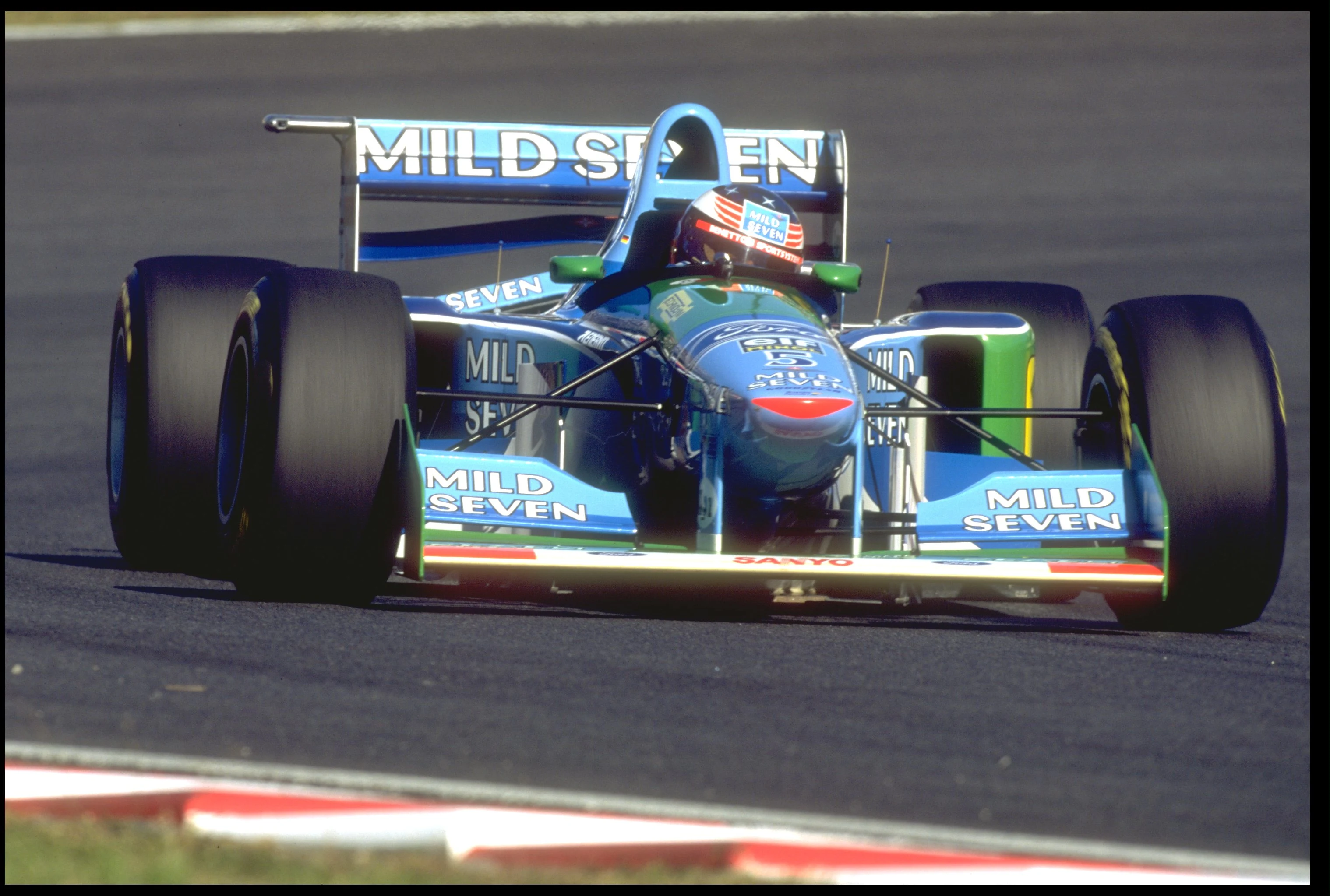
Revisiting Imola
The 1994 San Marino Grand Prix remains one of the darkest weekends in Formula 1 history. After Rubens Barrichello suffered a serious crash in Friday qualifying, the sport was shaken by the deaths of Roland Ratzenberger during Saturday qualifying and three-time champion Ayrton Senna during Sunday's race.
“I knew it had been portrayed many times, and I watched closely how it had been portrayed,” Freitag explains. “Whenever you go into the story, you already know what’s going to happen. There’s this heaviness hanging over the whole weekend.
“I wanted to make something that takes you through the weekend as everybody back then lived through it. You come into it totally unprepared, quite light-hearted in a way. The mood is good. You’re going into a race weekend in Italy. It’s going to be a very exciting race.
“And then it happens out of nowhere. Then something happens again, and again.”
Even after shortening the Imola footage, difficult editing choices remained.
“You’re in the middle of it and can’t believe it’s happening, that it’s not stopping, and that it’s getting worse and worse,” she says. “I wanted to recreate that experience of being in the weekend, reliving this trauma.”
Senna also features later in the documentary, with the link between the great Brazilian and the German extending far beyond that tragic weekend. In 2000, Schumacher became emotional at Monza when asked about what it felt like equalling Senna’s total of 41 Grand Prix victories.
“I wanted [Senna] to still be there because I feel he’s always there with Michael, always at the back of his mind,” Freitag explains. “He carried it with him all those years, so I knew it was very central to him.”
Discovering a different Schumacher
For Freitag, throughout her experiences working on the documentary, she got to discover far more about the seven-time champion that she ever thought she would.
“I was surprised by the person I found, because growing up I knew him much later, in the 2000s, when he was already the legend," she says. "I was surprised that he comes across as quite sensitive. You feel the way he’s protecting this sensitivity, and you can also see where he puts on a show, or where this diverges and he becomes somebody else.”
In one archived English-language interview, Schumacher discusses his fears after Imola, giving Freitag access to his own account of the season.
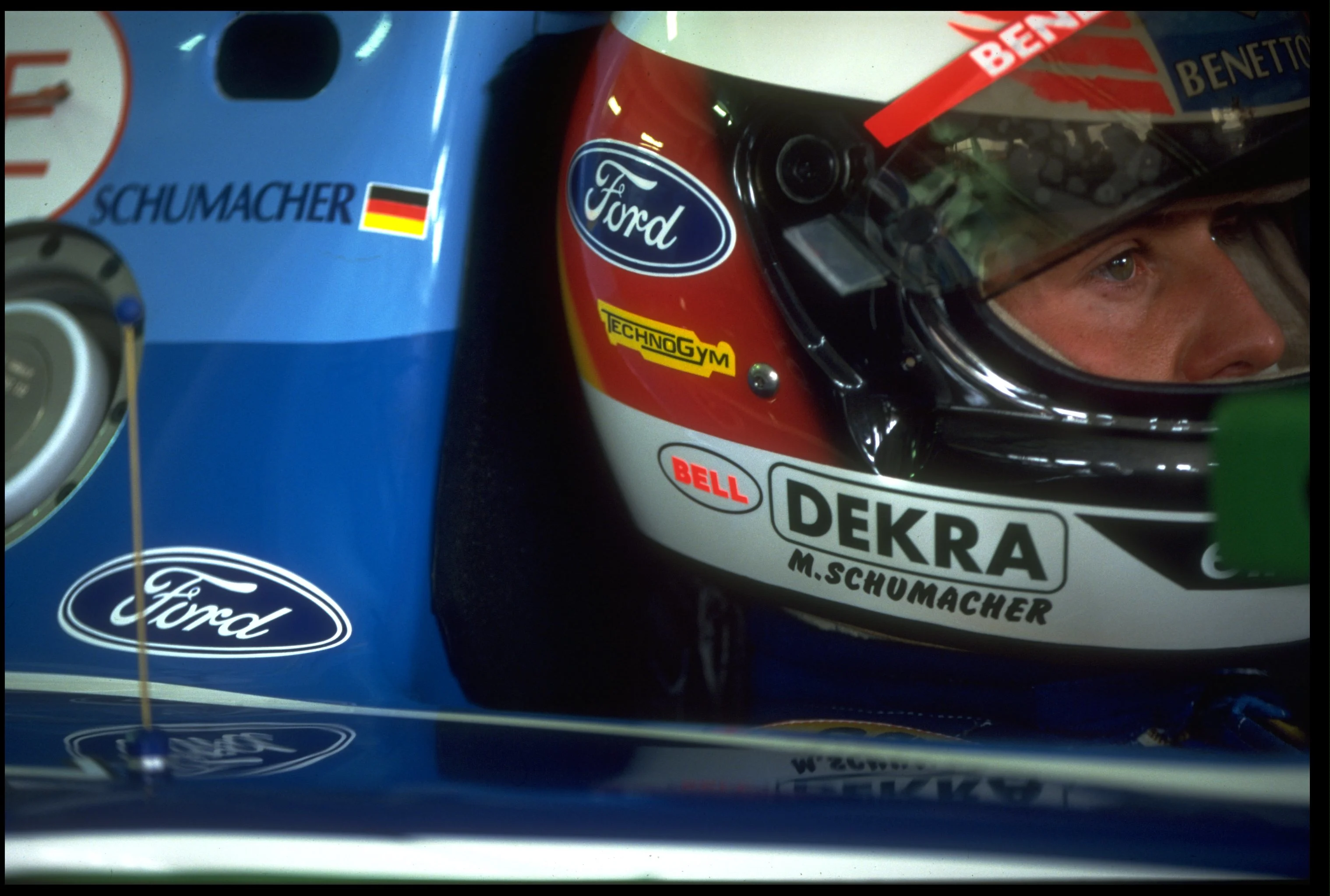
“When I was interviewing all the other people, I was searching for this specific character trait, because I had always thought he was so fearless, so ruthless,” she says.
“But in the archive, especially in this interview, I see a totally different Michael. I was searching for this guy. Is that the real one? Does he have a protective shield, or is that just one moment in time? That formed my picture of him, my feelings towards him, a lot. I centred the film around it.”
Willi Weber, who managed Schumacher during his rise through F1, was one contributor whose recollections supported what Freitag had found.
“A lot of the protagonists solidified this picture of Michael as someone without fear, someone very straightforward – except Willi, his manager, who was very close to him,” she says.
“He solidified what I’d seen in the archive. He said Michael was totally different after Imola, that it really changed him.”
Corinna and the people who knew him
Corinna Betsch, Michael’s girlfriend in 1994, is another central figure. The couple married the following year, and the documentary includes her memories of their early relationship and entering the F1 world together.
“I also like that they came into this circus as a couple, both very fresh, and discovered it together,” Freitag says. “I like the way she wasn’t impressed by it at all. She found it rather boring, and then developed an interest in it.”
Freitag met Corinna through the production company to discuss the documentary before filming their interview.
“She was so light-hearted and fun," she adds. "That jumped out at me. She had such a lightness about her, and I wanted to bring that across in the film because I hadn’t seen it in previous interviews.”

However, the documentary also reveals aspects of Schumacher's experiences that Corinna was unaware of at the time. In an archived interview, Schumacher spoke about struggling to sleep following Senna's death at Imola, admitting that he had begun to fear for his own life, even away from the circuit.
“Corinna is aware of the interview, but she wasn’t aware that he actually had those fears or feelings in that moment,” Freitag says. “Both are true. It’s interesting, and it expands the depth of the character.”
Other contributors offer different perspectives on the 1994 season. Briatore was Schumacher’s Team Principal at Benetton, while Coulthard made his F1 debut with Williams at the Spanish Grand Prix following Senna’s death. Former F1 boss Bernie Ecclestone also appears, as do German television personalities Kai Ebel and Heiko Wasser.
“I did a lot of research about many characters and spoke to a lot of people. I narrowed it down from a storytelling perspective: who’s crucial to which moment?” Freitag explains.
“But also, in the pre-interviews, who would open up the most? Who would really give me some closeness to the main character?
"It was also important to balance these stars with people behind the scenes who you haven’t heard of. I like that mixture.”
Capturing Schumimania
The documentary also records the role of television in Schumimania. Broadcaster RTL was helping F1 reach a wider German audience, while the Hockenheim archive showed the fans gathering near the circuit.
“The scene at Hockenheim is a bit of a love letter to a German soul that has disappeared,” Freitag says. “I remember it from growing up. It raises memories, and that world isn’t there any more. It’s like a love letter to a past time.
“I knew I wanted this scene, and then I found this great footage of the camping area. That was amazing. I think there were three or four hours of interviews with the fans… It was a gift.”
Freitag also considered why spectators identified so strongly with a driver who did not always appear at ease with his growing celebrity.
“He doesn’t seem super outgoing or charismatic in the sense of entertaining a crowd. So why do Germans love him so much?” she says. “That’s what Willi always said: ‘He’s one of us.’”
At the final Grand Prix in Adelaide, Schumacher and Damon Hill arrived separated by just one point. Their collision ended both races, leaving Schumacher to claim his first World Championship.
“For sure at the end [of the film], when he became World Champion for the first time,” Freitag says when asked when Schumacher became the figure remembered today.
“It’s really the starting point of his legend. The whole film is before the legend. It’s only at the end that the legend is born. It’s the road to becoming this legend.”
Next Up
Related Articles
 UnlockedThink you're Fan1? Win a VIP trip to Las Vegas
 'We owe him one' – Mekies on Hadjar's Singapore issues
 UnlockedThe upgrades behind Red Bull’s breakthrough in Singapore
 UnlockedPALMER: What really cost Hamilton a podium in Singapore?
.webp) Unlocked5 Winners and 5 Losers from Singapore
Unlocked5 Winners and 5 Losers from Singapore F1 returns to Africa with 10-year deal to race in Rwanda